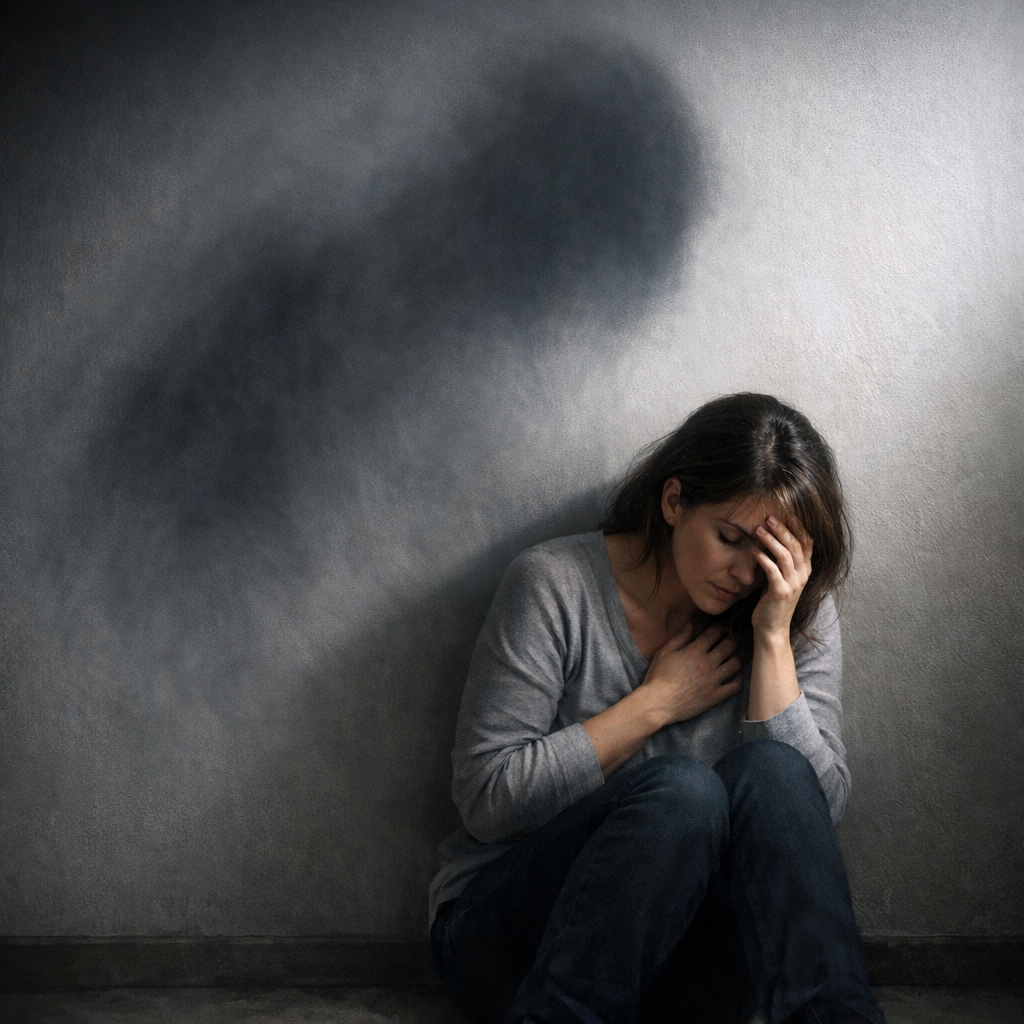
That first drink might feel like the ultimate chill pill, calming your nerves and easing stress… But behind the scenes, alcohol disrupts your brain’s neurotransmitters, ramps up inflammation, and throws off nutrient balance — setting you up for intense hangxiety, rebound anxiety, and even full-blown panic attacks the next day (or worse, long-term). The surprising truth about why booze is a short-term reliever but a major anxiety trigger — and what you can do about it.
By Bernd Guzek, MD, PhD, Author
“At first, alcohol helped with my anxiety”
“Sometimes it starts quietly. I still remember those evenings when I thought a glass of wine was the reward after a long day. It did help — at first. My shoulders relaxed, the rumination stopped, and for an hour or two I felt a calm I no longer found during the day. I would never have believed that this same glass would one day be the reason I sat bolt upright in bed at three in the morning, heart racing, hands shaking, and my body collapsing under a wave of fear. Even less would I have thought that this anxiety would later strike during the day as well — without warning, without reason, without context. Some called it a ‘panic disorder.’ Others said, ‘You’re just overloaded.’ But deep down I knew: something wasn’t right. Not with my mind — with my body.”
Many people who drink know this experience exactly. And almost all of them interpret it wrong. Alcohol is considered a relaxant, a mental calmer. The fact that it can do the exact opposite is one of the least-known yet best-documented findings in modern neuroscience.
Alcohol doesn’t just intensify anxiety — it can trigger it. In many cases, it is even the main cause of panic attacks that are misunderstood as “psychological.” In reality, processes are taking place that have little to do with character, resilience, or the psyche. It’s biochemistry. And it is powerful.
The Amygdala — the fear center that alcohol makes vulnerable
In our brain sits an almond-shaped cluster of nuclei: the amygdala. In milliseconds, it decides whether we feel safe or threatened. A complex system of neurotransmitters and anti-inflammatory signals normally keeps it in balance. One key player is a small, often overlooked messenger: interleukin-10. It acts like a brake that prevents excessive excitation.
This is where a major research finding comes in: alcohol lowers interleukin-10 levels in the amygdala. It weakens the natural brake that protects our fear center from over-excitation. As a result, the amygdala becomes more sensitive, irritable, and easier to destabilize. People then report suddenly becoming thin-skinned, startling more easily, or falling into internal alarm mode for no reason.
What they don’t realize: their fear center has lost its protective padding.
Why alcohol first calms — and then anxiety rebounds
The next step is the one almost everyone affected knows intuitively: alcohol relaxes. It dampens rumination, lowers stress pressure, and can actually relieve anxiety in the short term. This is mainly due to the interplay of two neurotransmitters: GABA and norepinephrine.
GABA is our calming neurotransmitter. Alcohol enhances its effect. That’s why a drink can sometimes feel like a blanket over the nervous system. At the same time, alcohol initially reduces norepinephrine activity — the stress messenger that controls heart rate, alertness, and alarm readiness. The combination creates real, physically perceptible relaxation. None of it is imagined.
But the brain is a master of adaptation. When alcohol regularly contributes to calming, the brain downregulates its own mechanisms. GABA receptors become less sensitive. Glutamate, GABA’s excitatory counterpart, is upregulated. The stress axis becomes hypervigilant, almost suspicious. Norepinephrine is released more quickly. In short: the system shifts its balance — toward excitation. When blood alcohol levels drop, the dampening effects disappear while the activating mechanisms are still fully engaged. That’s the moment many people wake up at night feeling as if an invisible alarm has gone off — a panic attack out of nowhere.
These 3 a.m. panic attacks are among the classic, biochemically clearly explainable consequences of regular drinking. They have nothing to do with dreams or repressed emotions. They are the result of a nervous system trying to compensate for alcohol’s influence — and overshooting the mark in its counter-regulation.
Why anxiety can also strike during the day out of the blue
But the story doesn’t end there. Over time, a second mechanism develops that goes far beyond the nighttime rebound and explains why many affected people suddenly experience waves of anxiety and panic during the day.
When synapses have to constantly dampen and counter-steer for days or weeks, they fall out of rhythm. Studies show that just ten days of heavy drinking are enough to completely disrupt the brain’s natural signaling traffic. Neurons no longer transmit signals cleanly, neurotransmitters arrive inconsistently, and the balance between excitation and calm becomes unstable. In everyday language, people describe it as “I feel like my body is reacting to something that isn’t there.” That’s exactly how it feels — and exactly what is happening.
Once the fear system is sensitized, it no longer needs an external trigger. A minimal stimulus is enough — often none at all. Some people suddenly notice their heart skipping a beat or their breathing becoming shallow — and that alone can trigger a daytime panic attack, even without alcohol withdrawal. The amygdala interprets it as danger. It reacts the way it has learned: with alarm. It may sound chaotic, but it is completely logical.
Neuroinflammation — when alcohol sets fire in the brain
Only at this point does it become clear why alcohol dependence is so often associated with long-term anxiety: not because of thoughts, but because of inflammation. Microglia, the brain’s immune cells, react very sensitively to alcohol. They release inflammatory messengers that further destabilize the nervous system. The amygdala becomes even more excitable, the stress axis jumps faster, and the brain’s entire filtering capacity — normally responsible for sorting out unimportant stimuli — collapses.
This is the moment when anxiety is no longer tied exclusively to alcohol withdrawal. It becomes a kind of background noise, a permanent state. Some describe it as inner restlessness that never completely goes away. Others as constant alertness. Still others as diffuse panic that can come like a wave — morning, noon, or night. Neuroinflammation is probably the most important reason why anxiety in alcohol misuse often becomes chronic.
When the body runs out of building blocks — the underestimated role of nutrients
Another often-overlooked factor: alcohol depletes the body of the substances it needs to produce neurotransmitters. Thiamine (vitamin B1) is central. Without thiamine, the brain cannot properly process energy. Serotonin depends on vitamin B6 and vitamin D. GABA needs magnesium. Dopamine requires folate and B12. When these substances are missing — which almost inevitably happens with regular consumption — the nervous system can no longer work stably.
Then anxiety arises not because “someone feels that way,” but simply because the body can no longer supply what it needs to balance stress and fear circuits. The psyche suffers because the biochemistry is missing.
Why anxiety often gets worse in the first sober weeks
Many people are frightened when anxiety initially increases after they stop drinking. This is not a sign of setback. It is a sign that the systems are reorganizing. GABA and glutamate slowly find a new ratio. The stress axis needs time to calm down. Inflammation in the brain subsides — but not overnight. Sleep cycles stabilize only gradually. And nutrient stores refill only with consistent intake.
But then something happens that many describe as “returning to one’s own life”: the nervous system regains its natural calm. Panic loses its footing. Inner restlessness recedes. And the anxiety that felt so alien quietly fades away, almost imperceptibly, just as it came.
In the early phase of abstinence, treating physicians often prescribe sedatives such as diazepam. This can be a great help in the first few days — but one must keep in mind the addiction risk of these medications: physical dependence on benzodiazepines can develop after just 2–4 weeks of daily use. The body begins downregulating its GABA-A receptors after only a few weeks. This is the same mechanism as with alcohol — which is why withdrawal symptoms are so similar. And it is not desirable in the long term, because the system cannot fundamentally recover that way.
What really helps those affected
There are proven ways out. The most important decision is to break the cycle of dampening and rebound. The body needs a period without alcohol to recalibrate its receptors, neurotransmitters, and stress axis. Adequate supply of thiamine, magnesium, vitamin D, and other key substances supports regeneration. Anti-inflammatory lifestyle factors — sleep, nutrition, stress reduction — additionally help reduce neuroinflammation. And those who notice that anxiety persists often benefit from therapeutic support, not because the anxiety is “psychological,” but because the nervous system needs support during this phase.
Anxiety is not a sign of weakness — it is a signal
The most important thing in the end: anxiety caused by alcohol is not personal failure. It is a physical signal. A sign that the nervous system is overloaded, that inflammation, neurotransmitters, and stress axes are out of balance. Anyone who understands where this anxiety comes from no longer needs to feel ashamed of it. And they no longer have to endure it. The way out does not begin with willpower, but with knowledge — and the decision to give one’s own body the chance to find peace again.
Frequently Asked Questions (FAQ)
Can alcohol really trigger anxiety disorders?
Yes. Alcohol affects several systems that play a central role in anxiety. It alters GABA and glutamate activity, puts the stress axis on permanent alert, and increases inflammatory activity in the brain. Studies show that chronic alcohol consumption makes the amygdala more sensitive, thereby promoting anxiety and panic. Many affected people experience their symptoms as “psychological,” even though biochemistry has primarily gone off the rails in the background.
Why do I wake up at night with panic attacks after drinking?
After a few hours, blood alcohol levels drop. The initially calming effect on GABA fades, while the counter-regulatory systems are still revved up. Glutamate, norepinephrine, and stress hormones dominate, and the amygdala is already sensitized. This can lead at night to a biochemical rebound that manifests as a sudden panic attack with racing heart, trembling, and fear of death — without any external trigger.
How can anxiety strike during the day out of the blue?
Over time, regular alcohol consumption damages synaptic connections, activates microglia, and leads to a state of chronic neuroinflammation. This makes the fear system fundamentally irritable. Then it no longer needs alcohol withdrawal to trigger an attack. The tiniest physical signals — or no recognizable cause at all — can be enough for the amygdala to sound the alarm and anxiety to feel like it comes “out of the clear blue sky.”
What role do nutrient deficiencies play in alcohol-related anxiety?
Alcohol depletes the body of, among others, vitamins B1, B6, B12, folate, magnesium, and vitamin D. These substances are needed to produce neurotransmitters such as serotonin, dopamine, and GABA and to ensure the brain’s energy supply. When they are missing, the nervous system can no longer reliably perform its calming and stress-regulation functions. The result is inner restlessness, irritability, and increased anxiety up to panic attacks.
Doesn’t anxiety get worse at first during abstinence?
Often yes. In the first sober weeks, GABA and glutamate reorganize, the stress axis slowly calms down, inflammatory activity in the brain gradually decreases, and nutrient stores are rebuilt. During this phase, anxiety and restlessness can initially increase. It is unpleasant, but not a sign that abstinence “doesn’t work” — it is an expression of the ongoing readjustment.
Is diazepam a good solution for anxiety in early abstinence?
Benzodiazepines like diazepam can be useful in the first few days of withdrawal to dampen physical and psychological withdrawal symptoms. However, they act on the same GABA receptors that have already been altered by alcohol and become addictive very quickly. Physical dependence can develop after just two to four weeks of daily use. For stable, long-term recovery of the nervous system, they are therefore not suitable and should only be used short-term, under close medical supervision, and consistently tapered off.
Brief Overview of Studies on Anxiety, Panic, and Alcohol
- Patel RR et al. (2021): IL-10 normalizes aberrant amygdala GABA transmission and reverses anxiety-like behavior and dependence-induced escalation of alcohol intake. Prog Neurobiol. Animal study showing that chronic alcohol weakens IL-10 signaling in the amygdala, disrupts GABA transmission, and intensifies anxiety behavior. Increasing IL-10 can partially reverse these changes.
- Melkumyan M et al. (2024): Central amygdala neuroimmune signaling in alcohol use disorder. Review. Review of neuroimmune mechanisms in the central amygdala in alcohol use disorder. Describes how cytokines, microglia, and astrocytes co-regulate anxiety, stress responses, and relapse tendency.
- Ye JH et al. (2025): Neuroimmune Mechanisms in Alcohol Use Disorder. Current review on neuroimmune signaling pathways in AUD. Emphasizes the role of proinflammatory cytokines, microglia activation, and disrupted reward and stress circuits in anxiety, craving, and relapse.
- Daily alcohol intake triggers aberrant synaptic pruning leading to synapse loss and anxiety-like behavior (2020). Experimental study showing that ten days of heavy drinking in an animal model are sufficient to activate microglia, degrade synapses in the prefrontal cortex, and trigger pronounced anxiety behavior.
- Walter TJ, Vetreno RP, Crews FT (2017): Alcohol and stress activation of microglia and neurons: brain regional effects. Alcohol. Shows how alcohol and stress together activate microglia, amplify neuroinflammatory processes, and thereby promote behavioral changes up to anxiety and depression.
- Boas GRV et al. (2022): Alcohol induces neuroinflammatory processes and consequently anxiety in rats. Animal study describing a direct link between alcohol-induced neuroinflammation and anxiety behavior. Supports the thesis that alcohol-related anxiety is often immunologically mediated.
- Kalapatapu N et al. (2025): Thiamine Deficiency and Neuroinflammation Are Important Factors in Alcohol-Induced Brain Damage. Review on thiamine deficiency in alcohol dependence. Explains how energy crises in the brain, oxidative stress, and inflammation intensify cognitive disorders and emotional symptoms.
- Langlais PJ et al. (1995 and later reviews): Alcohol-Related Thiamine Deficiency: Impact on Cognitive and Memory Functioning. Classic reviews on the role of vitamin B1 undersupply in alcohol-related brain damage. Describe how thiamine deficiency can impair not only memory but also emotional stability.
- Manzardo AM et al. (2015): Change in psychiatric symptomatology after benfotiamine treatment in alcohol use disorder. Drug Alcohol Depend. Clinical study in which high-dose benfotiamine reduced psychological distress in severely alcohol-dependent men. Supports the importance of thiamine for mood and anxiety symptoms.
- Stanton A (2011): The Impact of Thiamine Treatment on Generalized Anxiety Disorder. Older clinical work suggesting that thiamine deficiency can contribute to anxiety symptoms and that substitution may improve the complaints.
- Gorky J et al. (2016): The role of the gut–brain axis in alcohol use disorders. Pharmacol Ther. Review on the gut-brain axis in AUD. Discusses how alcohol alters barrier function, microbiota, and systemic inflammation, thereby influencing neuropsychiatric symptoms as well.
- Drinkaware / current review articles on “Alcohol and anxiety” and “hangxiety”. Popular-science summaries that clearly explain for laypeople the clinical observations of alcohol-induced anxiety, GABA/glutamate imbalance, sleep disturbances, and nutrient deficiencies.
Recent Posts on Our Blog
- Chronic Fatigue and Alcohol
- Brain Damage from Vitamin Deficiency in Alcoholics: An Often Overlooked Danger
- The Hidden Cancer Risk in Alcohol: Biological Causes and Key Organs Involved
- Histamine and Alcohol: Why a Single Glass of Wine Triggers Heart Palpitations and Anxiety
- Heart Arrhythmias from Alcohol: How One Drink Too Many Can Make Your Heart Stumble
- Why Heavy Drinking Ultimately Kills Your Sex Drive and Performance
- Alcohol: The number one killer of the pancreas
- Sober at Last – Yet Unhappy
- Alcohol and Sleep: Why You Jolt Awake at 3 AM
- Does Trump Have an Alcoholic Personality?

Bernd Guzek, MD. PhD
Physician, Author, Relative & Co-Founder of Alcohol adé
Has been dealing for many years with the biochemical foundations of addiction and brain metabolism disorders as well as their influence through nutrients.