Bernd Guzek, MD, PhD
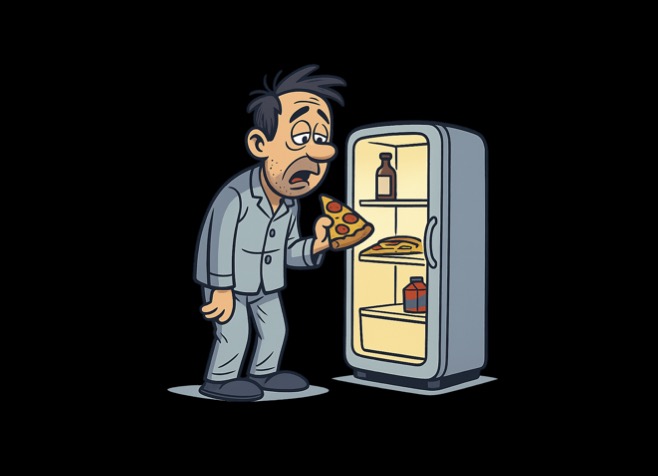
Many people know this: After a merry evening with alcohol, hunger strikes at some point. In the middle of the night, often around three or four o’clock, you suddenly find yourself in the kitchen looking for pizza, chips, or chocolate. Even people who have little appetite in the evening wake up hungry after alcohol. But why is that?
The answer is a bit more complicated than “exhausting evening, too many calories burned.” Alcohol disrupts several regulatory circuits that control our hunger and satiety feelings.
When the Fridge Is the Real Final Boss
Of course, one could say: “A few beers already provide enough calories.” But the real figure-killer often comes much later after midnight. While sober people are in deep sleep, alcohol consumers battle entirely different opponents: the frozen pizza, the chip remnants in the cupboard, or the last piece of cake from the day before. The fridge becomes the final boss — and almost always wins.
The result then often shows on the scale, in jeans that have become tighter, or in the waist circumference that grows steadily from evening to evening, largely unnoticed.
Alcohol and Blood Sugar
Alcohol has a direct effect on sugar metabolism. Normally, the liver can produce new glucose from building blocks like amino acids or lactic acid — a process called gluconeogenesis. Alcohol blocks this new formation. This means: After several hours without food intake, the blood sugar level drops because the energy store “liver” fails.
At the same time, alcohol stimulates the release of insulin. This hormone ensures that sugar disappears faster from the blood into the cells. The consequence: Blood sugar drops even faster. Result: The body reacts with a strong hunger signal.
The Hunger Hormones Get Out of Sync
But that’s not all. In addition to blood sugar, the hormones ghrelin and leptin also play a role. Ghrelin is something like a hunger hormone. It is released in the stomach and signals to the brain: “Time to eat.” You can guess: Alcohol drives up the ghrelin level — appetite increases further.
Leptin is the counterweight to ghrelin. It comes from fat tissue and conveys satiety. After alcohol consumption, the leptin level drops — the stop signal from the fat tissue arrives later than normal. You feel less full, even if you’ve actually eaten enough. Together, this creates a dangerous mix — increased hunger and missing satiety feeling.
Ghrelin stimulates appetite, leptin signals satiety.
Alcohol shifts both — hunger rises, satiety fails to appear.
Reward System Tickled Twice
Eating rewards you. Drinking alcohol does too. Both stimuli run in the brain via the same dopamine system, more precisely via the nucleus accumbens. That’s where our “craving circuit” sits. Alcohol activates it, eating does too.
When both come together, there’s a strong dopamine double hit. This reinforces the desire for high-calorie food, often fatty or sweet.
Salt, Water, and Energy
Another effect of alcohol is the inhibition of the antidiuretic hormone (ADH). As a result, the body produces more urine and loses fluid. This can trigger a craving for salty snacks to counteract fluid loss — because salt binds water.
In addition, there’s heat loss: Alcohol dilates blood vessels, releasing more heat outward. The body also responds to this with hunger to supply additional energy for reheating.
Consequences for Health and Daily Life
“Night eating” after alcohol is not just a calorie trap. Eating pizza late at night burdens the stomach and worsens sleep quality. The next day, you feel additionally exhausted.
In the long term, the pattern of alcohol plus nighttime eating reinforces weight gain, promotes the development of fatty liver, and increases the risk of metabolic syndrome. And not least: The nighttime blood sugar drop can trigger palpitations, restlessness, and panic attacks.
Many mistake this for withdrawal symptoms — in reality, it’s often hypoglycemia behind it.
Conclusion
Feeling sudden great hunger after alcohol is no coincidence. Alcohol disrupts several systems — from sugar metabolism to hormones to the reward system in the brain. The result: Hunger at the wrong time and reaching for foods you might not choose when sober.
Those who understand this recognize: Alcohol is not just an “empty calorie,” but also an appetite stimulant. And that makes it doubly dangerous.
Frequently Asked Questions (FAQ)
Why do I get hungry at night after alcohol?
Alcohol blocks gluconeogenesis in the liver. Blood sugar drops.
At the same time, ghrelin rises and often insulin too.
This shifts hunger and satiety. Result: nighttime cravings.
Why do I especially crave fatty or sweet things?
Alcohol and food activate the same dopamine pathways in the reward system.
With low blood sugar, the body prefers quickly available calories.
That’s why fatty and sugary foods seem particularly appealing.
Does it help to eat before drinking?
A balanced meal with protein, fiber, and some fat dampens blood sugar fluctuations.
This can mitigate cravings.
However, it does not eliminate the main effect of alcohol on liver and hormones.
Is nighttime hunger a withdrawal symptom?
Often, it’s nighttime hypoglycemia behind it. It can trigger palpitations, restlessness, and strong hunger.
With regular high consumption, real withdrawal symptoms can also occur.
In case of doubt, always consult a doctor.
Current Posts in Our Blog
- Chronic Fatigue and Alcohol
- Brain Damage from Vitamin Deficiency in Alcoholics: An Often Overlooked Danger
- The Hidden Cancer Risk in Alcohol: Biological Causes and Key Organs Involved
- Histamine and Alcohol: Why a Single Glass of Wine Triggers Heart Palpitations and Anxiety
- Heart Arrhythmias from Alcohol: How One Drink Too Many Can Make Your Heart Stumble
- Why Heavy Drinking Ultimately Kills Your Sex Drive and Performance
- Alcohol: The number one killer of the pancreas
- Sober at Last – Yet Unhappy
- Alcohol and Sleep: Why You Jolt Awake at 3 AM
- Does Trump Have an Alcoholic Personality?

Bernd Guzek, MD. PhD
Physician, Author, Relative & Co-Founder of Alcohol adé
Has been dealing for many years with the biochemical foundations of addiction and brain metabolism disorders as well as their influence through nutrients.