
Niacin (vitamin B3) is one of the central vitamins in human energy metabolism. The body uses niacin to form the coenzymes NAD⁺ and NADH, which are involved in energy production in virtually every cell. Without sufficient NAD⁺, mitochondria cannot efficiently convert nutrients into energy.
Breaking down alcohol consumes especially large amounts of NAD⁺. Chronic alcohol use can therefore dramatically increase the need for niacin and lead to functional deficiency states. Typical consequences include exhaustion, concentration difficulties, sleep disturbances, and depressive moods—symptoms many people recognize during or after alcohol withdrawal.
Bill W., co-founder of Alcoholics Anonymous, already recognized that niacin can play a surprisingly important role after meeting Canadian psychiatrist Abram Hoffer.
By Bernd Guzek, MD, PhD
Bill W., one of the founders of Alcoholics Anonymous, was both happy and deeply unhappy at the same time. Happy because after many years he was no longer dependent on the bottle—but profoundly unhappy because he constantly thought about alcohol. Depression, insomnia, and exhaustion tormented him when, in 1958, through writer Aldous Huxley, he met Canadian psychiatrist and biochemist Abram Hoffer.
“Bill wasn’t doing well, even though he had been sober for many years. He suffered from tremendous anxiety, insomnia, tension, and fatigue,” Hoffer later recalled. The Canadian was a proponent of orthomolecular medicine—its followers are usually extremely knowledgeable about body chemistry, know which deficiency states accompany many illnesses, and often successfully correct missing substances in a targeted way.
Hoffer didn’t have to think long about Bill W.’s problem. He recommended niacin, vitamin B3. At that moment, even Hoffer could not have foreseen that Bill W. would later write a book about it, conduct studies, and above all become a contentedly sober alcoholic.
Niacin – The Body’s Energy Manager
Niacin (nicotinic acid, vitamin B3) is one of the water-soluble B vitamins and is present in nearly all living cells. Although the human body can produce small amounts of it from the amino acid tryptophan, it mainly obtains its needs from food. Moreover, this conversion “steals” valuable tryptophan from the body. Part of the absorbed niacin is stored in the liver.
Niacin’s central importance lies in its role as the primary building block of the coenzymes NAD⁺ (nicotinamide adenine dinucleotide) and NADH. These two molecules are indispensable for energy metabolism, acting as electron carriers in the production of energy from carbohydrates, fats, and proteins.
The process can be simplified as follows:
During the oxidative breakdown of nutrients, energy-rich electrons are generated. NAD⁺ accepts these electrons and is converted to NADH. NADH then transports the electrons to the mitochondrial respiratory chain—the cell’s power plants—where the stored energy is released as ATP, the cell’s actual energy currency.
After releasing the electrons, NAD⁺ returns to its oxidized form and can accept electrons again. It is therefore a continuous cycle: NAD⁺ is constantly regenerated to keep energy metabolism running.
This process is only possible if sufficient niacin is available, as it forms the basis for NAD⁺ production.
A niacin deficiency leads to reduced NAD⁺ availability. The result is diminished cellular energy production—with effects mainly on physical and mental performance.
Niacin Deficiency Often Causes Deep Exhaustion in People with Alcohol Dependence
This connection is especially relevant with long-term heavy alcohol consumption: Alcohol is one of the strongest consumers of NAD⁺ in metabolism, because alcohol breakdown is a highly NAD⁺-intensive process. After stopping alcohol, the NAD⁺ balance often normalizes only after several weeks—which many people notice as a **perceptible increase in baseline energy and concentration ability**. Conversely, this state of energy depletion is a massive trigger for relapse.

Niacin deficiency also explains the depression, insomnia, and exhaustion from which Bill W. suffered. Chronic alcohol consumption forces the body to convert large amounts of tryptophan into niacin to compensate for the massive NAD⁺ consumption. This leaves less tryptophan available for serotonin production—a serotonin deficiency promotes depression and sleep disturbances. At the same time, neurotoxic intermediates are produced that promote brain inflammation and further intensify chronic fatigue and cognitive impairments.
Niacin is therefore far from an exotic add-on vitamin; it is a central prerequisite for the continuous regeneration of NAD⁺—and thus **for stable energy supply to all cells**.
What Else the Body Urgently Needs NAD⁺—and Therefore Niacin—for
NAD⁺ is involved in almost all central processes that keep our cells running. It is especially important for:
Citric Acid Cycle and Respiratory Chain – Energy Production
The citric acid cycle and respiratory chain are the central steps in mitochondrial energy production. Here, ATP is formed from sugar, fat, and protein—the cells’ immediate energy source. Without sufficient NAD⁺ this process stalls, even if enough nutrients and oxygen are present.
Sirtuins – The Cell’s Maintenance Crew
Sirtuins are enzymes involved in repair, protection, and aging processes. Among other things, they regulate inflammation, stress responses, and cell function stability. Their activity directly depends on adequate NAD⁺ levels.
PARP Enzymes – Repair of DNA Damage
PARP enzymes detect DNA damage and initiate repair mechanisms. This process consumes large amounts of NAD⁺. In chronic deficiency, repairs are delayed or incomplete.
AA Co-Founder Bill W. Was Thrilled
The AA co-founder was certainly thrilled that he had overcome his depression, cravings, energy problems, and insomnia.
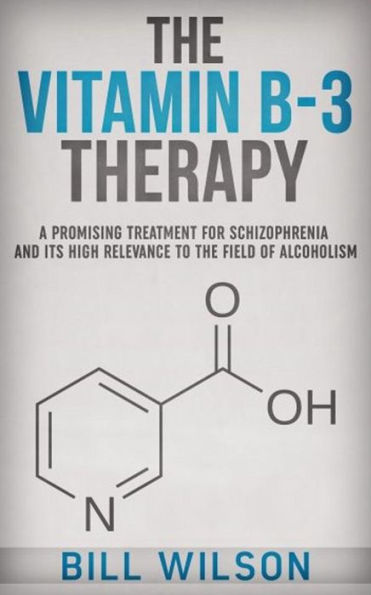
In 1965 he tested 30 already sober AA members who still had persistent complaints: 10 improved in the first month, another 10 in the second; the rest showed no additional effect. He then wrote the booklet “The Vitamin B3 Therapy”.
In the 1960s and 1970s, American physician and researcher Russell F. Smith discovered what had caused Bill’s depression, cravings, insomnia, and lack of energy. In a five-year field study (open clinical observational study) of 507 alcoholics treated with high-dose niacin, the vitamin eliminated the so-called “Dry Drunk Syndrome” in almost all cases. 75 percent of patients showed noticeable benefit (improved mood, drive, sleep, reduced cravings and “dry drunk” symptoms)—and 24 percent had an excellent response, meaning stable mood and complete abstinence for at least two years.
Such field studies are often criticized for not being double-blind, i.e., without a placebo group. However, double-blinding was impossible with the niacin used at the time, because it caused strong skin flushing, warmth, sometimes itching and tingling shortly after ingestion—and very noticeably so. The patient would immediately have known: “I’m in the real-drug group.”
Moreover, a study showing such effectiveness in the real-substance group would today be ethically terminated, and even the placebo patients would be switched to the active substance.
Pellagra – The Old Disease of Poverty, Often Unnoticed Even in Well-Off Alcoholics
This niacin-deficiency disease is by no means new in medicine. In 1981 Japanese pathologists published a study of 20 deceased alcoholics—all had suffered from pellagra, the fully developed niacin-deficiency disease. And no one had noticed it before their death.
Pellagra is a classic deficiency disease caused by severe niacin deficiency (vitamin B3). The name comes from the Italian “pelle agra” – “rough skin” – and describes the typical symptom triad:
- Dermatitis (rough, reddened, later scaly skin, often on sun-exposed areas – “Casal’s necklace” on the neck)
- Diarrhea (persistent diarrhea, malabsorption)
- Dementia (mental symptoms: depression, irritability, confusion, hallucinations, dementia-like states)
Added to this are frequent exhaustion, sleep disturbances, loss of appetite, and a feeling of permanent inner restlessness—symptoms strikingly similar to what is today described as Dry Drunk Syndrome in long-term alcoholics.
The cause is usually chronic deficiency of niacin and/or tryptophan (niacin precursor in the body), combined with a diet low in bioavailable niacin (e.g., corn-based diet without nixtamalization). Historically, pellagra spread in poor regions of Europe and the USA in the late 19th/early 20th century—until the niacin connection was recognized in 1937/38 and the disease was largely eradicated through supplementation.
In chronic alcohol consumption a functional pellagra-like situation arises: Alcohol massively consumes NAD⁺ (formed from niacin) especially during breakdown and detoxification, blocks tryptophan conversion, and promotes inflammation—thus lowering effective niacin status, **often despite normal blood levels**.
Many “dry drunks” show exactly the mental and energetic symptoms of pellagra, just without the classic skin lesions. These appear less often in alcoholics because the deficiency is more subtle and shorter-term.
Bill W. – Success with Nutrient Therapy, Rejection by AA
After his positive personal experiences, Bill W. actively advocated for niacin as a supplement to AA work. For him, nothing was more obvious than sharing his new insights with his newly founded organization to make quitting alcohol easier for members and to prevent dissatisfied sobriety and relapses.
But he found no support. Instead, he was asked not to promote it further within the organization.
Given the enormous advances in biochemistry and medicine since Bill’s treatment by Hoffer and his small pilot study, the approach seems even more convincing today: During and after alcohol withdrawal, one should specifically ensure the body receives enough niacin—the key vitamin for energy metabolism.
Niacin is the collective term for two chemically related substances: nicotinic acid and nicotinamide (also called niacinamide). Both can contribute to NAD⁺ formation in the body—but they differ markedly in effects and tolerability.
-
Nicotinic acid
Frequently causes the typical flush (warmth sensation, skin reddening, itching), especially at higher doses.
Proven to lower cholesterol and triglycerides and was therefore previously used as a lipid-lowering agent. -
Nicotinamide (niacinamide)
Causes no flush and has no relevant effect on cholesterol levels.
It is primarily used to support NAD⁺ metabolism and is considered better tolerated.
Important note:
Retarded (slow-release) forms of nicotinic acid are associated with increased risk of liver toxicity, especially with long-term use or higher doses.
Very high doses of nicotinamide can also stress the liver but are generally less problematic than slow-release nicotinic acid.
For long-term use, particular attention should therefore be paid to the substance form and galenic formulation.

FAQ – Frequently Asked Questions about Niacin
Why is niacin particularly important for people recovering from alcohol dependence?
Niacin (vitamin B3) is needed to form the coenzymes NAD⁺ and NADH. These molecules are central to cellular energy production. Alcohol breakdown consumes large amounts of NAD⁺. This can significantly increase niacin requirements. A functional deficiency can promote exhaustion, concentration problems, sleep disturbances, and depressive moods.
Can alcohol cause niacin deficiency?
Yes. Chronic alcohol consumption increases NAD⁺ consumption in metabolism. At the same time, alcohol often worsens nutrition and disrupts conversion of the amino acid tryptophan to niacin. This can lower effective niacin status, even if blood levels initially appear normal.
What symptoms can niacin deficiency cause?
Severe niacin deficiency leads to pellagra. Typical are the three classic symptoms: dermatitis, diarrhea, and neurological disturbances. Milder forms often manifest as exhaustion, irritability, sleep problems, depressive moods, and concentration difficulties.
What is the difference between niacin, nicotinic acid, and nicotinamide?
Niacin is the collective term for vitamin B3. It includes two chemical forms: nicotinic acid and nicotinamide. Both can contribute to NAD⁺ formation. Nicotinic acid often causes the so-called flush with skin reddening and warmth. Nicotinamide usually does not trigger this effect.
What role did niacin play for Bill W., co-founder of Alcoholics Anonymous?
Despite sobriety, Bill W. suffered from depression, insomnia, and strong alcohol cravings. Canadian psychiatrist Abram Hoffer recommended niacin. Bill W. later reported significant improvement in his symptoms and advocated for greater research into nutrients in alcohol dependence.
More Posts in Our Blog
- Niacin: A Key Vitamin for People Recovering from Alcohol Dependence
- The Addiction Memory: Why the Brain Never Forgets Alcohol – and How We Can Still Break Free
- Between Spotlight and Crash: Why Alcohol Is So Prevalent in the Music Scene
- Tingling and Numbness in the Feet – Recognizing Alcohol-Related Polyneuropathy
- Magnesium in Alcohol Withdrawal – Why a Deficiency Can Worsen Symptoms
- Chronic Fatigue and Alcohol
- Brain Damage from Vitamin Deficiency in Alcoholics: An Often Overlooked Danger
- The Hidden Cancer Risk in Alcohol: Biological Causes and Key Organs Involved
- Histamine and Alcohol: Why a Single Glass of Wine Triggers Heart Palpitations and Anxiety
- Heart Arrhythmias from Alcohol: How One Drink Too Many Can Make Your Heart Stumble

Bernd Guzek, MD, PhD
Physician, author, family member & co-founder of Alcohol Adé
Has been studying the biochemical foundations of addiction and brain metabolism disorders—and their influence by nutrients—for many years.