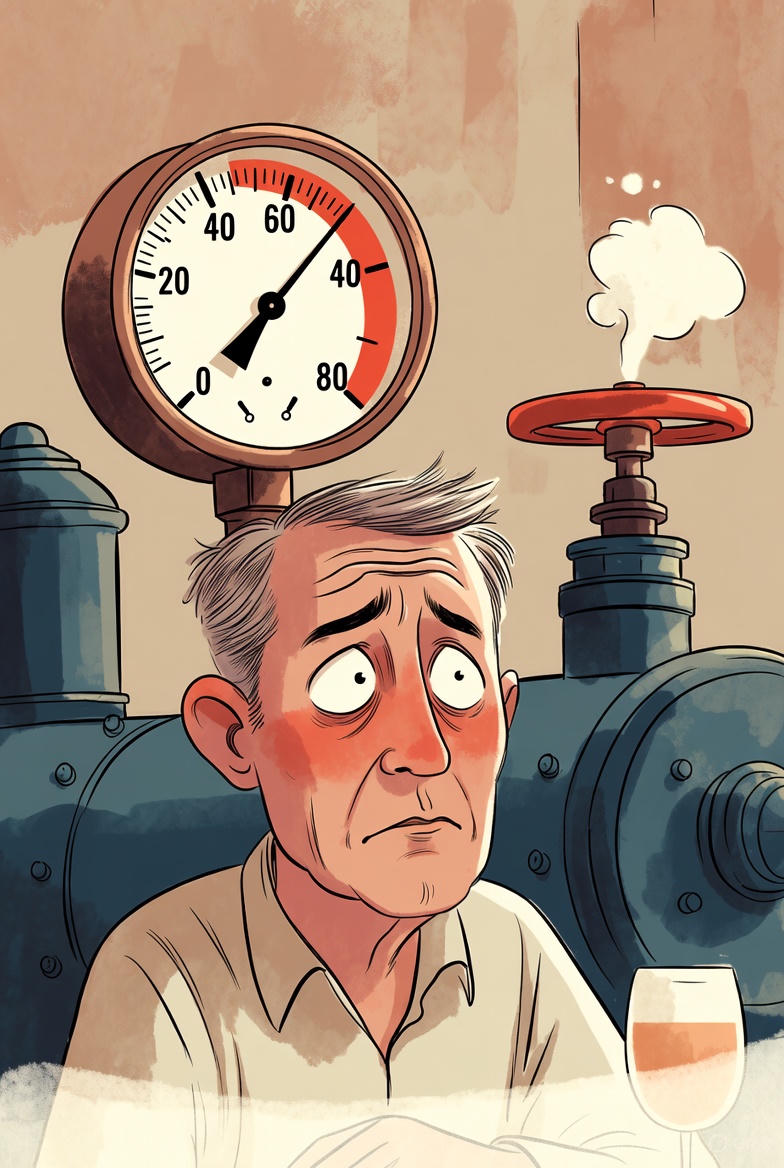
This post explains why alcohol drives up blood pressure, how to recognize the warning signs, and what complications can arise. Above all, it shows that alcohol-related high blood pressure can often be treated remarkably well—if you understand how tightly the underlying mechanisms are intertwined. Knowing the causes allows you to take targeted action. And often, the most important step is simpler than you might think.
By Bernd Guzek, MD, PhD, Author
Many people enjoy a glass of wine or beer in the evening to unwind. It seems harmless, almost like a little ritual after a long day. But while it feels relaxing, the body is actually working overtime. Alcohol affects blood pressure more than most people realize—often unnoticed, and over years. It throws several regulatory systems out of balance: nerves, hormones, blood vessels, electrolytes, and sleep. The result isn’t sudden drama, but a gradual process. Blood pressure rises slowly—at first only temporarily, eventually permanently. Many only notice when a routine checkup shows something abnormal or symptoms appear that they never linked to alcohol.
High Blood Pressure from Alcohol: Relaxation on the Surface, Stress Inside the Body
For many, alcohol is seen as a relaxant. A glass of wine to wind down, a beer after a stressful day—it’s supposed to calm the nerves. And that’s often how it feels, because alcohol manipulates the relaxing GABA system. In reality, though, the opposite happens inside the body. Even small amounts activate several blood pressure control systems, and the more regularly someone drinks, the more these effects solidify. The body then runs as if under constant, low-level stress. Many don’t feel it right away, but blood pressure rises—first subtly, eventually permanently.
One of the first mechanisms is activation of the sympathetic nervous system. The sympathetic system is the body’s accelerator pedal: it ramps up automatically during stress or danger (faster heartbeat, more energy, ready for action). Alcohol boosts the release of norepinephrine, a stress messenger.
Heart Rate Increases, Blood Vessels Constrict
Heart rate goes up, blood vessels narrow, and blood flow is redistributed. People who think alcohol makes them calmer are confusing the GABA-mediated feeling with the actual effect. Internally, it’s the opposite: an artificial stress mode that can be measurable in some people after just one or two drinks.
Then there’s the renin-angiotensin-aldosterone system—RAAS for short. This system normally kicks in when the body has too little fluid or blood pressure is too low. Think of it as the body’s emergency button for low blood pressure or low salt—it narrows vessels and makes the kidneys retain more water and salt to raise pressure and volume.
Constant Alcohol False Alarms Disrupt the Body’s Emergency System
Alcohol throws it off in multiple ways: everyone knows you have to visit the bathroom after the first few drinks. That’s because alcohol inhibits the antidiuretic hormone ADH, causing excess water loss. The body sees this as danger and ramps up RAAS. Angiotensin II, one of the strongest vasoconstrictors, rises and tightens blood vessels. Aldosterone ensures salt and water are retained.
Normally, these are sensible reactions without alcohol—but beer, wine, and spirits trigger constant false alarms in this system. Over time, it acts like a permanent pressure amplifier. Many drink in the evening and wake up with higher blood pressure—RAAS is a major reason for that.
Another often-overlooked mechanism is damage to the endothelium, the inner lining of blood vessels. Alcohol and its highly toxic byproduct acetaldehyde increase oxidative stress, causing vessels to gradually lose their ability to dilate normally. Nitric oxide (NO), the body’s main vessel relaxant, is produced less effectively under alcohol.
Eventually, Blood Vessels Become Like an Old, Dried-Out Balloon
At the same time, levels of endothelin-1 rise, which has the opposite effect: it constricts vessels. In fact, it’s the body’s strongest vessel constrictor—like an invisible fist squeezing the blood vessels and driving up pressure. The result is a kind of vessel cramp that gradually becomes permanent. Especially people who drink smaller amounts daily develop this subtle vessel stiffness.
In other words: imagine a new balloon—nice and elastic, easy to inflate and deflate. That’s how our blood vessels should be. Constant excess endothelin-1 makes the vessel walls stiffer week after week. Eventually, the arteries are like an old, dried-out balloon—barely stretchable and unable to relax properly. The result: higher blood pressure and more work for the heart.
Alcohol Disrupts Mineral Balance
And there’s more. Electrolyte imbalances, often underestimated, play a role too. Alcohol flushes magnesium out of the body, and many regular drinkers have potassium levels on the low side. It sounds minor, but the consequences are major: vessel muscles become more sensitive to stress hormones, contract more easily, and relax less effectively.
Potassium is also crucial for balancing salt and water—if it’s low, aldosterone can push blood pressure even higher by retaining more salt and water. Pressure rises faster.
The body’s fluid management gets thrown off too. Alcohol initially inhibits ADH, leading to more urination. Then the system overcompensates: ADH rises excessively and retains water. These swings between losing too much fluid and retaining too much are another reason for typical morning blood pressure spikes.
As If That Weren’t Enough: Micro-Inflammation from Alcohol
Micro-inflammation also plays a part. Chronic alcohol consumption increases inflammatory signals like IL-6 or TNF-α. For the body, this means stiffer, more sensitive, and less controllable vessel walls. The blood pressure system loses flexibility. People with concurrent overweight or poor sleep quality feel this effect strongly, sometimes without blaming alcohol.

Alcohol particularly interferes with metabolism. It promotes hepatic insulin resistance—and insulin, among other things, tells the kidneys to retain salt and activates the sympathetic nervous system. Many know the combination: a bit of a belly, slightly elevated fasting insulin, sleep issues—and alcohol as a daily relaxant to fall asleep. For blood pressure, it’s like a perfectly interlocking puzzle of amplifiers.
Poor Sleep Is the Cherry on Top for Raising Blood Pressure
Finally, alcohol worsens sleep. Many fall asleep faster but sleep worse overall. In the second half of the night, sympathetic activity rises; some not only snore but develop sleep apnea—both lead to nighttime blood pressure spikes. Those who wake up feeling wrecked, push through the day with coffee or energy drinks—and then drink regularly in the evening to unwind often don’t need extensive lab tests. The cause is frequently the interplay of disturbed sleep, nighttime stress response, and overactive RAAS.
All these mechanisms interact. That’s why alcohol doesn’t raise blood pressure through one single switch, but like tweaking multiple knobs on a mixing board: a little here, a lot there. For many, this means years of what they thought was “moderate” drinking, wondering why blood pressure keeps creeping up.
The answer is rarely mysterious. It’s usually biochemical—and surprisingly logical.
Preventing Alcohol-Related High Blood Pressure: How to Protect Your Vascular System
High blood pressure is rightly called the “silent killer.” Most people have no symptoms, or they misinterpret what they feel. Alcohol makes this worse because symptoms are often vague and fit into a lifestyle many see as normal: stress, poor sleep, a glass in the evening, morning fatigue. Many only discover elevated blood pressure during a routine checkup—or worse, when a complication occurs.
Typically, blood pressure is especially high in the morning. Many drinkers wake with slight head pressure, tense neck muscles, or inner restlessness. It’s often blamed on poor sleep—which is partly true, but only half the story. Alcohol alters sleep so that sympathetic activity surges in the second half of the night. The body is on internal alert even while you seem relaxed in bed. Morning nervousness or heart palpitations are therefore common early warning signs.
It’s Not Just the Hangover—It’s Often Unnoticed High Blood Pressure
Some people report occasional headaches, especially in the forehead or crown area. These often occur the day after drinking and are reflexively attributed to an alcohol hangover. In reality, they’re frequently pressure fluctuations caused by overactive RAAS, fluid retention, and vessel constriction. Notably, blood pressure can stay elevated even when you feel normal again.
Another symptom is dizziness, especially when changing position. It’s rarely linked to blood pressure. Many think of low circulation—in truth, it’s often tension changes in vessels amplified by alcohol. Vessel regulation is slower in regular drinkers, especially if the endothelium is already damaged. This can cause brief, strong blood pressure swings.
Dizziness, Heart Rhythm Issues, Restlessness—All Can Point to High Blood Pressure
Heart rhythm disturbances are also common. A slight stumble, a strong extra beat, or the feeling the heart is “working louder” is widespread among drinkers. It’s rarely the heart itself but the stress hormones alcohol releases—and thus the blood pressure system. Again, people almost never connect these symptoms to alcohol, seeing them as general fatigue or stress.
Many also feel restlessness, inner tension, or sleep disturbances. This is tricky because it creates a vicious cycle: poor sleep leads to tension, prompting another drink the next evening to relax. In this mode, blood pressure rises unnoticed. Especially people around 40 or 50 often mistake these for early signs of aging. Yet there’s often measurable, alcohol-related high blood pressure behind it.
Rare but striking are nosebleeds, sudden facial flushing, or pressure behind the eyes. These usually occur with very high pressure spikes and are alarm signals. Recurring trouble falling asleep, waking at night, or morning sweats also often fit the pattern of disrupted blood pressure rhythm from alcohol.
Many Ignore Symptoms for Years
The biggest problem isn’t lack of symptoms—it’s that they’re so nonspecific. Headache, restlessness, tired eyes, poor sleep—could be anything. But in the context of regular alcohol use, a pattern emerges: the body is trying to stabilize a vascular system constantly thrown off balance. And that causes those subtle clues many ignore for years.
Anyone who drinks regularly and recognizes one or more of these symptoms should measure blood pressure at home—fasting in the morning and evening, ideally over several days. Often, only then do the connections become clear. High blood pressure doesn’t arise on its own. It’s the result of biochemical processes alcohol amplifies in the background.
- Morning restlessness or heart palpitations
- Pressure in the head or neck
- Dizziness when standing up
- Facial flushing after small amounts of alcohol
- Occasional nosebleeds without obvious cause
- Restless sleep and waking at night
- Heart stumbling or strong extra beats
What Are the Complications?
Elevated blood pressure rarely stays harmless. That many people have “only slightly elevated” values for years without symptoms isn’t a sign of safety—it’s the insidious nature of hypertension working in the background. Alcohol accelerates this on multiple levels and speeds up complications often seen later in life.
The most common and dangerous consequence is stroke. High blood pressure damages small brain vessels, making walls brittle and promoting microaneurysms—tiny bulges. Alcohol worsens this by weakening the innermost vessel layer and boosting inflammation.
Significantly Higher Risk of Stroke, Heart Attack, and Heart Failure
Regular drinkers with untreated high blood pressure face a markedly increased risk of brain hemorrhages and ischemic events. Many felt “basically healthy” until something sudden happens—a severe dizzy spell, speech loss, one-sided paralysis. Yet warning signs often started years earlier.
Heart damage creeps in more gradually but is just as serious. Hypertension forces the heart muscle to constant overtime. The left ventricle thickens—initially compensatory, later pathological. Combined with alcohol, it’s a dangerous duo: high pressure damages vessels, alcohol weakens heart muscle cells through toxic and inflammatory processes. The result can be hypertensive heart disease progressing to heart failure. Many only notice when short of breath climbing stairs or unable to lie flat at night.
Alcohol Irritates the Heart’s Conduction System
Heart rhythm disturbances are another direct result of alcohol plus high blood pressure. Atrial fibrillation is classic. Pressure stresses the atria, alcohol irritates the conduction system—together, a weekend with “a few extra drinks” can trigger episodes in some. Over time, it becomes chronic with higher stroke risk. The infamous “Holiday Heart Syndrome” is just the visible tip of a problem far more common in regular drinkers.
Kidney damage is also not to be underestimated. Kidneys are central blood pressure regulators and among the first victims. Sustained high pressure narrows fine kidney vessels, reducing filtration. Alcohol worsens this by disrupting electrolytes and keeping RAAS overactive. The result is gradual, often unnoticed decline in kidney function over years. A slowly rising creatinine level is noted—but rarely linked to the evening “glass to unwind.”
The eye is a sensitive mirror too. Chronic high pressure can damage the retina, causing micro-bleeds or swelling and impairing vision. Alcohol’s additional effects on the microbiome and systemic inflammation worsen vessel reactions in the eye. For many, retinal changes are the first tangible sign something is seriously wrong.
Silent Complications Up to Sexual Dysfunction
Finally, there are silent complications no one immediately links to alcohol: cognitive decline, reduced resilience, constant fatigue, sexual dysfunction. Sustained high blood pressure impairs small vessels throughout the body. Alcohol adds oxidative stress, inflammation, and hormonal dysregulation. Together, this leads to gradual performance drop often blamed on stress, age, or lack of sleep.
The danger isn’t that complications hit immediately—it’s their slow buildup. Slightly elevated pressure, a few evening drinks, poor sleep, yet daily life somehow continues. But beneath the surface, vessels are damaged, organs strained, reserves depleted. Many only realize the full extent when they suddenly can’t “function” like before. By then, the alcohol connection often fades—though it was a central cause.
How Is Alcohol-Related High Blood Pressure Treated?
Treatment starts much earlier than the medicine cabinet. Alcohol-related high blood pressure often isn’t classic hypertension from genetics, age, and lifestyle—it’s directly caused by alcohol’s biochemical effects. Good news and bad: the bad is that alcohol is an effective pressure driver. The good is that blood pressure often improves remarkably fast when the toxin is removed.
The first step is almost always reducing or, better, completely stopping alcohol. Many patients see lower morning values within days. As sympathetic activity, RAAS, and fluid regulation calm down, the vascular system relaxes measurably. Nighttime spikes decrease, sleep deepens, morning restlessness fades. Some need far less medication once the alcohol factor is gone—something often underestimated in clinical practice.
Important: Regular Blood Pressure Monitoring
At the same time, regular blood pressure checks—ideally morning and evening, after several minutes of rest—provide a realistic picture of whether pressure is truly pathological or previously just alcohol-influenced. Many are surprised how much it fluctuates and how quickly it can improve.
Basic therapy includes classic lifestyle measures, but with a key difference: in alcohol-related hypertension, they often work stronger because they address a system previously overstimulated from multiple directions. A salt-conscious diet, more potassium-rich vegetables, moderate exercise, and especially good sleep have clear effects. Even regular evening walks—without the “after-work beer”—can lower nighttime sympathetic activity and stabilize pressure.
If pressure remains high despite stopping alcohol or complications exist, medications come into play. Choice depends on overall risk profile. ACE inhibitors and ARBs are often first-line, damping RAAS and protecting vessels. Calcium channel blockers work well on vessel tone—important if the endothelium is damaged. Diuretics are used when fluid and salt retention are issues. Beta-blockers make sense if heart rate and sympathetic activity stay high.
For former regular drinkers, one point is crucial: adherence. Many drink not just for pleasure but as stress regulation. Suddenly stopping can cause sleep issues, restlessness, or mood swings that affect medication. Education is key: the body readjusts, and this phase passes. Still, preparing doctor and patient is wise—medication often needs adjustment in the first weeks.
Don’t Neglect Sleep and Breathing
In some cases, focus on sleep and breathing. Alcohol worsens sleep apnea, and untreated apnea drives pressure. If loud snoring, breathing pauses, or daytime fatigue exist, diagnostic testing should be considered. Treating sleep apnea often lowers pressure enough to reduce or eliminate medications.
Finally, the psychological component matters. Many drink to manage stress—yet chronic stress itself raises pressure. No pill helps here. What does: fixed sleep times, small evening rituals, daily structure, exercise, adequate protein, stable blood sugar. Together, these achieve more than any single measure.
The bottom line is clear: alcohol-related high blood pressure is treatable—often very well. But treatment doesn’t (only) start with pills—it starts with understanding alcohol attacks blood pressure regulation from many angles. Remove that factor, and the system often stabilizes faster than expected. Only then is it clear what therapy is truly still needed.
How to Prevent Alcohol-Related High Blood Pressure?
The most important measure sounds simple but is biochemically precise: anyone wanting to protect their blood pressure avoids the constant influence of alcohol. Alcohol-related hypertension doesn’t just happen—it arises because multiple body systems are stressed simultaneously: sympathetic, RAAS, electrolytes, sleep, inflammation, endothelial function. Remove the trigger, and the system often calms remarkably quickly.
But prevention is more than just stopping alcohol. It means understanding the mechanisms alcohol amplifies—and targeting them specifically.
Blood Pressure Monitoring Especially Important When Quitting Alcohol
A key point is regular monitoring. Many don’t realize blood pressure fluctuates significantly. Measuring every few months at checkups doesn’t give a true picture. Better: two to three times a week, morning and evening, calmly and consistently. Especially important in weeks after reducing alcohol. Some are amazed how much morning pressure drops without evening drinks.
Next is sleep. Alcohol disrupts deep sleep phases, raises nighttime stress hormones, and promotes breathing pauses. Good sleep, conversely, is a natural pressure reducer—vessels relax, sympathetic tone drops, cortisol falls. Protecting sleep protects vessels. This includes fixed rhythms, evening wind-down, dark bedroom, and diet supporting stable blood sugar. A small but key tip: regular evening protein helps many avoid the after-work dip and reaching for the bottle.
Coffee in Normal Amounts Isn’t Dangerous but Can Amplify Spikes
Diet is also crucial. It doesn’t have to be perfect—just stable. Less salt, more potassium—an old principle especially effective here. Potassium-rich foods like vegetables, legumes, or daily fruit noticeably improve vessel regulation. Also worth checking: moderate coffee and adequate magnesium intake. Coffee in normal amounts isn’t harmful but can amplify short-term spikes with stress and alcohol. Magnesium relaxes vessel muscles—helpful especially for those who lost magnesium through alcohol.
Then there’s stress. Many drink not to party but to switch off. Stress itself drives pressure, and alcohol is an inefficient brake. Introducing small relief routines—short walks, five minutes of breathing exercises, time outdoors, afternoon breaks—takes the constant load off the sympathetic system. These don’t seem dramatic but are remarkably reliable.
Exercise Helps Against High Blood Pressure and Reduces Cravings
Exercise belongs too. Not intense training—regular moderate activity. Vessels become more elastic, resting pulse drops, stress reactivity decreases. People moving 20–30 minutes daily not only have lower long-term pressure—they also reach for alcohol less in the evening, as exercise provides the same calming effect without biochemical chaos.
A crucial, often underestimated preventive factor is honesty about habits. Many underestimate amounts or believe occasional glasses don’t matter. In reality, regularity—not absolute quantity—often causes the problem. One glass five evenings can be riskier than three on one weekend, as it daily fuels the pressure-driving mechanisms.
Regular doctor checkups are also part—especially with existing risks: overweight, sleep issues, family history, diabetes, or lipid disorders. Alcohol doesn’t act alone here but amplifies an already sensitive system. Prevention means removing the amplifiers.
The key message remains simple: alcohol-related high blood pressure isn’t prevented by chance. It’s prevented by protecting the systems alcohol overloads—and by realizing how finely tuned they are. The body isn’t built to fight the same irritant every evening. Give it rest, and it self-regulates. Surprisingly often, pressure then drops faster than you’d think possible.
Nutrients Against High Blood Pressure: Can Arginine, Magnesium & Co. Help?
Nutrients can influence blood pressure—but not like medications. They work more subtly, often slower, and reliably only when core triggers are reduced. For alcohol-related hypertension, this means: as long as alcohol is consumed daily or nearly so, individual nutrients may have small effects but won’t override the cause. Once alcohol is gone, however, clear and stable benefits often emerge. The body responds as intended again.
One well-known nutrient is arginine. As a precursor to nitric oxide (NO), the body’s main vessel relaxant, arginine can improve vessel function. Studies show mild to moderate pressure reductions—not dramatic, but measurable. The effect is especially visible in people with pre-stressed endothelium, common in regular drinkers. Arginine doesn’t work like a switch but supports a function weakened by oxidative stress and acetaldehyde.
We often hear from clients that arginine lowered their pressure enough to reduce medications in consultation with their doctor. Others notice no effect. It’s worth a try but rarely the first choice in medical practice. Anyone with a history of herpes simplex should be cautious—arginine can trigger outbreaks, as the virus uses it for metabolism and the body can only suppress, not eliminate, it. The counterpart amino acid lysine is sometimes used to counter this, but the effect isn’t reliable.
Magnesium Relaxes Blood Vessels
Another highly relevant factor is magnesium. It relaxes smooth vessel muscle and reduces contraction readiness. Alcohol depletes magnesium through increased excretion and impaired absorption. Many evening drinkers have latently low levels without noticing. Magnesium can especially help with nighttime restlessness, muscle tension, and pressure spikes. Combined with better sleep, the effect strengthens.
Potassium works even more directly—one of the most underrated minerals in blood pressure regulation. Potassium counters salt—the higher the intake, the better excess sodium is excreted. A diet rich in vegetables, legumes, and at least one daily fruit portion has measurable effects. Interestingly, regular alcohol often lowers potassium status, slowing a normally simple regulation system. Conscious potassium intake can restore this balance.
Omega-3 Fatty Acids Reduce Inflammation
Omega-3 fatty acids also show mild pressure-lowering effects in studies. They reduce inflammation, improve blood flow properties, and stabilize vessels. Chronic alcohol often raises inflammatory status—where omega-3 can provide real balance. Effects are moderate but relevant long-term.
An often-overlooked substance is coenzyme Q10. It supports mitochondrial energy production and acts as an antioxidant. Especially under alcohol-related oxidative stress, Q10 can help stabilize inner vessel layer function. Several smaller studies show mild systolic pressure reductions. Not huge, but noticeable for those with low energy, fatigue, or reduced resilience.
Surprising Approach: Beetroot. A Little.
A special role goes to beetroot or nitrate. The body converts nitrate via nitrite to NO—similar to arginine but a different pathway. Beetroot juice can lower pressure for hours, often 3–5 mmHg. Especially in people with impaired NO pathways from endothelial damage or inflammation, this shows surprising success. For ex-drinkers or those reducing alcohol, it’s a well-studied, simple tool.
Despite these positive effects: nutrients don’t lower pressure against alcohol. They amplify what the body is trying to do—and work best when stressors are already reduced. Expecting arginine, magnesium, or beetroot to “cure” an overactive sympathetic system or revved-up RAAS would be wrong. But they can noticeably support a recovering system.
The greatest benefit comes from synergy: less alcohol, better sleep, stable blood sugar, moderate exercise—and nutrients strengthening physiological regulation. In this context, magnesium, arginine, potassium, Q10, and omega-3 deliver full effect. They’re not miracle cures but reliable helpers. Especially after years of alcohol stress, they can give blood pressure regulation the support it needs to run stably again.
- Arginine – supports nitric oxide production
- Magnesium – relaxes vessel muscles
- Potassium – promotes excretion of excess sodium
- Omega-3 fatty acids – anti-inflammatory
- Coenzyme Q10 – improves energy supply to vessel cells
- Nitrates from beetroot – short-term vessel dilation
FAQ – Frequently Asked Questions On Blood Pressure And Alcohol
Can alcohol really raise blood pressure?
Yes. Alcohol activates multiple systems that increase blood pressure—including the sympathetic nervous system, RAAS, inflammatory pathways, and vessel tone. Even regular small amounts can cause lasting elevation.
How quickly does blood pressure drop after stopping drinking?
In many people, values improve within days. Sympathetic activity, fluid balance, and sleep normalize, and morning pressure often falls noticeably. Medication adjustments may be needed.
What are typical symptoms of alcohol-related high blood pressure?
Common are morning head pressure, restlessness, heart palpitations, dizziness, headaches, or poor sleep. Symptoms seem nonspecific and are often not linked to alcohol.
What complications threaten if alcohol-related high blood pressure goes untreated?
Key risks include stroke, heart rhythm issues like atrial fibrillation, heart failure, kidney damage, and retinal changes. Risk rises significantly with regular consumption.
Are lifestyle changes enough to lower blood pressure?
Often yes. Reducing alcohol, better sleep, exercise, salt-potassium balance, and stress reduction frequently lower pressure markedly. Many then need less or no medication.
Can nutrients like arginine or magnesium help?
Yes, they can support vessel function—especially after stopping alcohol. Arginine improves NO production, magnesium relaxes vessels, potassium aids sodium excretion. They supplement, not replace, treatment.
Further Reading On Blood Pressure And Alcohol
- Husain K et al. Alcohol-induced hypertension: Mechanism and prevention. World Journal of Cardiology. 2014.
Review of central mechanisms by which alcohol raises blood pressure—including sympathetic system, RAAS, oxidative stress, endothelial damage, and preventive approaches. - Padovan JC et al. Reactive Oxygen Species Are Central Mediators of Alcohol-Induced Hypertension. Antioxidants. 2023.
Detailed look at the role of reactive oxygen species, RAAS activation, and sympathetic system in alcohol-related hypertension; links molecular mechanisms to cardiovascular outcomes. - Gardner JD et al. Alcohol Effects on Cardiac Function. Alcohol Research: Current Reviews. 2015.
Overview of alcohol’s effects on heart muscle, rhythm, and blood pressure; solid foundation for links between hypertension, cardiomyopathy, and arrhythmias. - Di Federico S et al. Alcohol Intake and Blood Pressure Levels: A Dose–Response Meta-Analysis. Journal of Hypertension. 2023.
Meta-analysis showing a largely linear relationship between alcohol intake and systolic blood pressure—no clear “safe” threshold. - Cecchini M et al. Alcohol Intake and Risk of Hypertension: A Systematic Review and Meta-Analysis. Hypertension. 2024.
Systematic review finding hypertension risk rising even at relatively low drinking levels; key epidemiological evidence for causal link. - Algharably E et al. Understanding the Impact of Alcohol on Blood Pressure and Hypertension Risk. Polish Heart Journal. 2024.
Narrative review connecting mechanisms, epidemiological data, and clinical implications; readable summary for practice and counseling. - Fan XF et al. Association between daily alcohol intake and hypertension prevalence: A large population-based study. BMC Cardiovascular Disorders. 2025.
Recent cohort analysis showing clear positive association between daily alcohol and hypertension prevalence; underscores importance of “moderate” ongoing consumption. - Dong JY et al. Effect of oral L-arginine supplementation on blood pressure: a meta-analysis of randomized, double-blind, placebo-controlled trials. American Heart Journal. 2011.
Meta-analysis showing oral L-arginine supplementation can moderately lower systolic and diastolic pressure; basis for NO focus with arginine. - Shiraseb F et al. L-Arginine Supplementation and Blood Pressure: An Updated Systematic Review and Dose–Response Meta-Analysis. Nutrition Reviews. 2022.
Updated evidence on L-arginine; confirms pressure-lowering effects especially with higher baseline pressure and in certain groups. - Zhang X et al. Effects of Magnesium Supplementation on Blood Pressure: A Meta-Analysis of Randomized Double-Blind Placebo-Controlled Trials. Hypertension. 2016.
Shows significant, though moderate, pressure drop with magnesium supplementation; especially relevant in low-magnesium individuals. - Alharran AM et al. Impact of Magnesium Supplementation on Blood Pressure: An Umbrella Meta-Analysis. Current Hypertension Reports. 2024.
Umbrella meta-analysis on magnesium and blood pressure; confirms benefit especially at higher doses over longer periods and in hypertension. - Rosenfeldt FL et al. Coenzyme Q10 in the Treatment of Hypertension: A Meta-Analysis of Clinical Trials. Journal of Human Hypertension. 2007.
Early meta-analysis describing clear reductions in systolic and diastolic pressure with coenzyme Q10; foundation for Q10 as adjuvant therapy. - Dai S et al. The Association between the Diversity of Coenzyme Q10 Intake and Cardiometabolic Risk. Nutrients. 2024.
Recent evaluation of dietary and supplemental coenzyme Q10 intake and links to blood pressure and cardiometabolic risks. - Benjamim CJR et al. Nitrate Derived From Beetroot Juice Lowers Blood Pressure in Patients With Arterial Hypertension: A Systematic Review and Meta-Analysis. Frontiers in Nutrition. 2022.
Systematic review showing significant systolic pressure reduction with nitrate-rich beetroot juice in hypertensives; key evidence for nitrate use.
More Posts on Our Blog
- Chronic Fatigue and Alcohol
- Brain Damage from Vitamin Deficiency in Alcoholics: An Often Overlooked Danger
- The Hidden Cancer Risk in Alcohol: Biological Causes and Key Organs Involved
- Histamine and Alcohol: Why a Single Glass of Wine Triggers Heart Palpitations and Anxiety
- Heart Arrhythmias from Alcohol: How One Drink Too Many Can Make Your Heart Stumble
- Why Heavy Drinking Ultimately Kills Your Sex Drive and Performance
- Alcohol: The number one killer of the pancreas
- Sober at Last – Yet Unhappy
- Alcohol and Sleep: Why You Jolt Awake at 3 AM
- Does Trump Have an Alcoholic Personality?

Bernd Guzek, MD, PhD
Physician, Author, Affected Relative & Co-Founder of Bye Bye Booze
Has been working for many years on the biochemical foundations of addiction and brain metabolism disorders as well as their modulation by nutrients.