By Bernd Guzek, MD, PhD
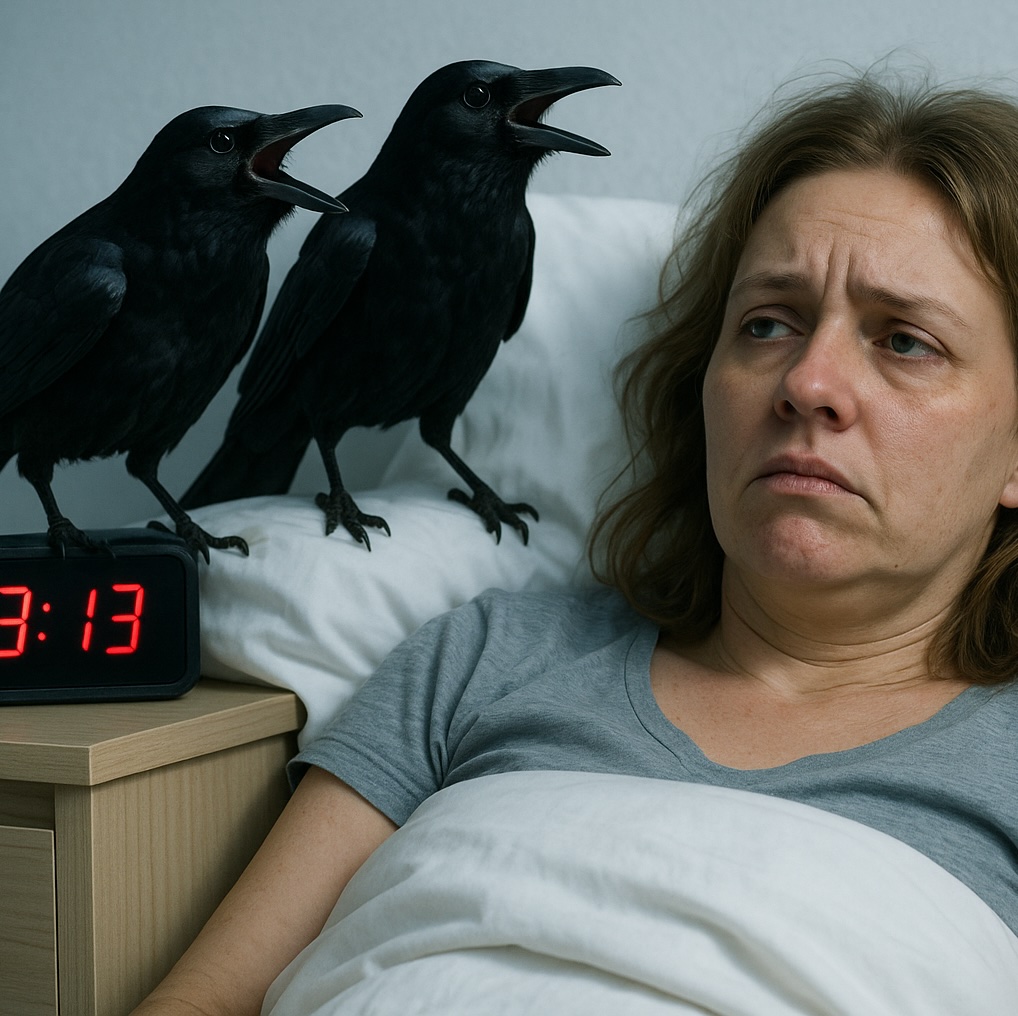
“The alarm goes off, and I’m completely wrecked. The first half of the night doesn’t deserve to be called sleep. Coma would be more accurate. Wide awake at three o’clock, with the usual racing heart. Thought carousel. Everyday things blow up into huge fear monsters and perch like black crows on my pillow. Eventually, they disappear, and I fall asleep. Two more hours – then I have to get up,” writes Gaby Guzek in the book “Bye Bye Booze” about what most people with problematic alcohol consumption know: Completely disturbed sleep.
Why You Fall Asleep Faster at First
How does that happen? Let’s take a look: Alcohol initially acts in the brain like a strong sleep aid. The substance enhances the effect of the inhibitory neurotransmitter GABA and makes nerve cells sluggish. At the same time, the level of adenosine rises, that molecule that builds up tiredness during the day and creates sleep pressure in the evening. With both together, alcohol tricks the body into thinking it’s high time to fall asleep. That explains why many people doze off unusually quickly after drinking.
But it also explains why quite a few alcoholics toss and turn sleeplessly in bed from three in the morning, suddenly worry like crazy – or either go tidy the garage, clean the kitchen, or flood Facebook with memes.
Why Alcohol Makes You Wake Up Around 3 AM
Because the sleep that alcohol brings is not natural sleep. After a few hours, the picture flips. The adenosine level, which alcohol artificially drove up, drops abruptly – the sleep pressure collapses. At the same time, alcohol interferes deeply with the hormonal controls of sleep.
At the center is a structure in the brain with the not-so-easy-to-remember name hypothalamic-pituitary-adrenal axis (HPA axis), which regulates stress responses. The most important stress hormone of this axis is cortisol, which is also the body’s natural wake-up hormone.
Normally, cortisol follows a clear daily rhythm: low at night, rising in the early morning. But alcohol disrupts this process in two ways. On one hand, it activates the release of stress hormones early in the evening – via corticotropin-releasing hormone (CRH) in the hypothalamus, then to ACTH in the pituitary gland, up to cortisol release in the adrenal gland. On the other hand, it prevents the normal nighttime cortisol drop. Therefore, the brain remains in permanent alert mode instead of calming down. With chronic consumption, there’s a flattening of the stress response during the day, while at night hyperactivity throws a party – the rebound is then particularly noticeable.
Disrupted Hormone Rhythm: Cortisol and Melatonin
Closely linked to this is the disruption of the melatonin rhythm. Melatonin is our “sleep hormone,” produced in the pineal gland under the control of the internal clock. Alcohol inhibits its release and shifts its temporal curve – and thus the internal clock as well. This results in a missing crucial signal for nighttime recovery.
Especially in the second half of the night – when melatonin should normally be high and cortisol low – an imbalance arises: too little melatonin, too much cortisol. Many affected people experience exactly then the abrupt awakening, often accompanied by heart palpitations, sweating, and panic feelings.
Hypoglycemia and Nighttime Stress Hormones
Additionally, alcohol disrupts blood sugar regulation. Since it blocks sugar production in the liver, hypoglycemia can occur at night. Not a few alcoholics are driven to the fridge for a nighttime snack, which makes body fat grow. The body reacts to the dropping blood sugar with counter-regulation through adrenaline, noradrenaline, and cortisol – hormones also known as fight-or-flight hormones. All of them wake you up and rev up the circulation.
But that’s not all. Because the sleep rhythm itself is thrown into disarray. The REM phases important for memory and emotional processing are almost completely suppressed in the first half of the night. In the second half, a REM rebound follows: particularly intense dream phases that promote nightmares or bizarre dreams – and unfortunately also contribute to waking up.
So several mechanisms converge in the early morning hours: The drop in adenosine level, overactivity of the HPA axis with too much cortisol, inhibition of melatonin, blood sugar fluctuations, and the REM rebound. The result is the typical pattern that many affected people know: quick falling asleep after drinking – and then abrupt awakening around three in the morning, often accompanied by panic attacks or a restless, sleepless rest of the night.
For Those Who Want to Know More: Molecular Basis of Sedation by Alcohol
The rapid tendency to fall asleep after alcohol consumption is based on several parallel mechanisms:
- GABA_A Receptors: Alcohol docks onto GABA receptors and enhances their effect. It prolongs the opening time of chloride channels and thus strengthens the inhibition of postsynaptic neurons. Result: widespread dampening of excitability in the cortex and thalamus, leading to quick falling asleep.
- Glutamate System: While GABA presses the brake pedal, alcohol simultaneously takes glutamate, the ‘accelerator neurotransmitter,’ out of play. So brain activity is doubly throttled.
- Adenosine: The level rises quickly, adenosine binds to A1 receptors and promotes sleep pressure.
- Autonomic Imbalance: Even in the acute phase, alcohol shifts the balance between sympathetic (stimulating) and parasympathetic (calming) systems. The parasympathetic braking effect is weakened, while sympathetic activity increases relatively. This raises the nighttime heart rate – a factor that not only makes falling asleep unstable but also favors nighttime awakenings (racing heart, restlessness, craving).
This combined effect – inhibition of excitation, enhancement of inhibition, and disruption of vegetative balance – explains why, at blood alcohol levels around 0.05–0.1%, the time to fall asleep is significantly shortened (often 10–20 minutes), but sleep remains biologically unstable from the start.
Alcohol and the Internal Clock
The internal clock is located in the suprachiasmatic nucleus (SCN) of the hypothalamus, one of the evolutionarily oldest structures in the brain. It belongs to the diencephalon and developed in early vertebrates. Its functions, such as regulating hunger, thirst, temperature, and reproduction, are essential for survival and have been largely conserved over evolution – basic survival mechanisms are controlled here.
Precisely here, alcohol changes important mechanisms: Especially the expression of key genes like PER2 and CLOCK is disrupted. This shifts the circadian rhythm – much like jet lag. Additionally, external time cues like light (via retinal ganglion cells) or meals are less effective because alcohol reduces the SCN’s sensitivity. The consequence: The coordination between internal clock and environment gets out of sync.
Chronic Jet Lag from Alcohol
Anyone who drinks regularly lives in a kind of chronic biological jet lag – with shifted sleep-wake patterns, unstable hormone signals, and increased tendency for nighttime awakenings. This costs the body valuable regeneration night after night: Deep sleep and REM phases fall short, processing of experiences, feelings, and memories remains incomplete.
You feel the consequences the next day: Fatigue, concentration problems, irritability, and a weakened immune system. Long-term, the risk increases for metabolic disorders like obesity or diabetes, as well as cardiovascular diseases and depression. Particularly insidious: The sleep deficit intensifies the craving, the desire for alcohol as supposed “self-medication,” also to fall asleep again – and so the vicious cycle continues.
Restful sleep often only returns when alcohol is completely avoided and the body has a chance to regain its natural rhythm. Members of our free and anonymous forum can ask questions directly and share experiences.
FAQ – Frequently Asked Questions
Why do I often wake up at night around three with a racing heart and anxiety after drinking alcohol?
Alcohol disrupts the nighttime hormone rhythm. Around three, the wake-up hormone cortisol naturally rises and often spikes excessively under alcohol’s influence. Additionally, blood sugar fluctuations and stress hormones like adrenaline and noradrenaline cause racing heart and inner unrest. This favors sudden awakening with anxiety feelings.
Does alcohol help with falling asleep or harm sleep overall?
Alcohol often shortens the time to fall asleep. However, it reduces deep sleep and REM phases and makes sleep fragmented. Nighttime awakening becomes more likely. Overall, alcohol worsens sleep quality.
How long does it take for sleep to normalize after quitting alcohol?
It varies individually. In the first weeks, falling and staying asleep problems are common. Afterward, sleep quality and recovery usually improve significantly. After a few months, the body typically returns to a stable natural sleep rhythm.
What does REM rebound mean after alcohol consumption?
REM stands for “Rapid Eye Movement,” the dream phase of sleep. Alcohol suppresses this phase almost completely in the first half of the night. When the alcohol level drops later, the brain catches up on the missing dream phases – often very intensely and restlessly. This so-called REM rebound leads to vivid dreams or nightmares and often contributes to awakening in the second half.
Why does hypoglycemia occur at night after alcohol consumption?
Alcohol blocks new sugar formation in the liver. If blood sugar drops at night, the body counters with: It releases adrenaline, noradrenaline, and cortisol to provide energy. These stress hormones wake you up, increase pulse, and can trigger heart palpitations or anxiety feelings.
More Posts on Our Blog
- Chronic Fatigue and Alcohol
- Brain Damage from Vitamin Deficiency in Alcoholics: An Often Overlooked Danger
- The Hidden Cancer Risk in Alcohol: Biological Causes and Key Organs Involved
- Histamine and Alcohol: Why a Single Glass of Wine Triggers Heart Palpitations and Anxiety
- Heart Arrhythmias from Alcohol: How One Drink Too Many Can Make Your Heart Stumble
- Why Heavy Drinking Ultimately Kills Your Sex Drive and Performance
- Alcohol: The number one killer of the pancreas
- Sober at Last – Yet Unhappy
- Alcohol and Sleep: Why You Jolt Awake at 3 AM
- Does Trump Have an Alcoholic Personality?

Bernd Guzek, MD, PhD
Physician, Author, Affected Relative & Co-Founder of Bye Bye Booze
Has been working for many years on the biochemical foundations of addiction and brain metabolism disorders as well as their modulation by nutrients.