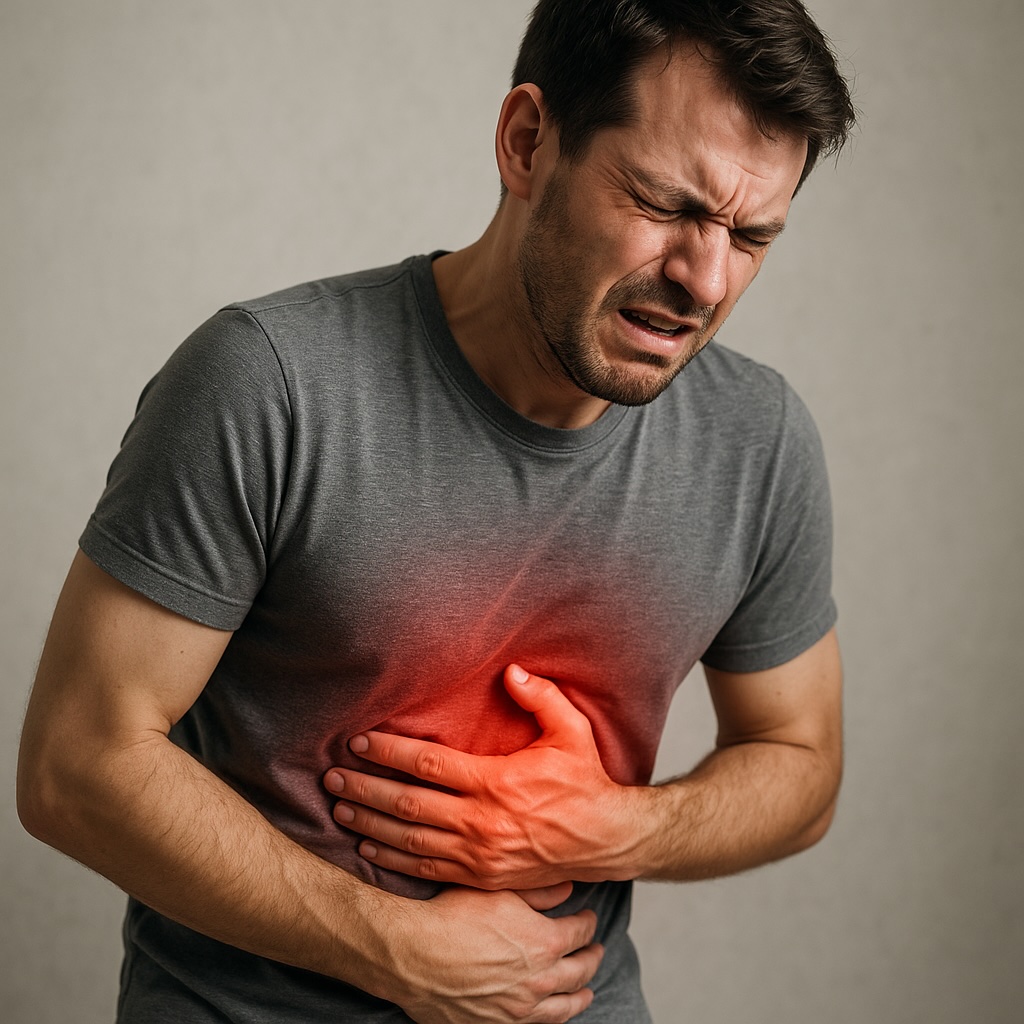
Alcohol is the most important cause of pancreatitis after gallstones. Early signs are nonspecific upper abdominal complaints after eating; without abstinence, chronic damage threatens with digestive disorders and diabetes type 3c.
By Bernd Guzek, MD, PhD
What Does the Pancreas Do – and Why Alcohol Harms It
The pancreas is one of the most patient organs we have. It usually only becomes noticeable when it’s almost too late. When it painfully inflames, alcohol is very often to blame.
The pancreas lies transversely in the upper abdomen, directly behind the stomach. The pancreas is an inconspicuous but vital organ with two central tasks: It produces digestive enzymes that break down fats, proteins, and carbohydrates in the small intestine. And it regulates blood sugar by releasing hormones like insulin and glucagon. If this organ gets out of balance, both digestion and metabolism are massively disrupted.
Doctors distinguish between acute and chronic inflammation of the pancreas. The main causes of acute pancreatitis are gallstones and alcohol. Alcohol is the trigger in about 25–35% of cases here. In chronic pancreatitis, however, alcohol is the undisputed leader as a cause: In Western societies, it is responsible for about 60–80% of all chronic inflammations.
Alcohol Destroys the Pancreas
The risk for the pancreas increases from about 80–150 g of pure alcohol per day, if this consumption occurs over many years. This usually means ten years or more of regular, excessive drinking. Not every alcoholic develops pancreatitis, but those who also smoke or have a genetic predisposition have an even higher risk.
- 80 g of alcohol corresponds to about 2 liters of beer or 0.8 liters of wine.
- 150 g of alcohol is around 1.5 liters of wine or 0.4 liters of spirits (40%).
Note: Figures refer to pure alcohol (ethanol).
Early Symptoms
Alcohol-related pancreatitis often announces itself insidiously. After fatty meals, the affected person notices nonspecific upper abdominal pain. In addition, there are bloating, a feeling of fullness, and occasional diarrhea with greasy stools.

These early signs are often misinterpreted – and the pork knuckle is then washed down with one or two shots, because that’s supposed to “kick-start” fat digestion. Many initially consider this harmless “stomach problems” or an intolerance. In reality, the body is already signaling that the pancreas is under significant stress.
Later Symptoms
If drinking continues undeterred, the complaints worsen. The next stage involves severe, belt-like pain in the upper abdomen that radiates to the back. In addition, nausea, vomiting, and fever occur during acute flares. In chronic inflammation, severe digestive problems arise: Fatty stools, weight loss, and deficiencies.
Particularly serious: diabetes mellitus type 3c. It occurs when the insulin-producing cells in the pancreas are destroyed by chronic inflammation. Unlike type 2 diabetes, there is no issue with insulin sensitivity here, but a real insulin deficiency – usually requiring insulin for life. In addition to insulin deficiency, glucagon is often lacking. Hypoglycemia can therefore be harder to assess.
| Stage | Typical Symptoms |
|---|---|
| Early Phase | Upper abdominal pain, feeling of fullness, bloating, occasional fatty stools |
| Later / Acute | Severe abdominal pain, nausea, vomiting, fever |
| Chronic | Persistent digestive problems, fatty stools, weight loss, diabetes type 3c |
Treatment
Mnemonic: Either give up alcohol, or give up your pancreas. More factually: The most important and indispensable measure is absolute alcohol abstinence. If one does not stop drinking completely and consistently, every therapy remains ineffective. Fundamentally and always.
In short: Alcohol damages pancreatic cells, disrupts enzyme secretion, promotes fibrosis, and triggers inflammation. Only complete abstinence can stop progression.
How Treatment Proceeds
- Outpatient Phase: Thorough diagnostics (blood values, ultrasound, possibly CT/MRI) and immediate alcohol abstinence. Pain therapy, dietary measures, and initial enzyme preparations can stabilize digestion.
- Acute Pancreatitis (Hospital): Intensive monitoring, IV fluids, strong painkillers, food abstinence or tube feeding; antibiotics or endoscopic interventions for complications (e.g., removal of pancreatic duct stones).
- Chronic Pancreatitis: Permanent enzyme substitution (pancreatin), consistent pain therapy, blood sugar checks, and usually insulin for type 3c. Endoscopic or surgical measures may be necessary for duct stenoses/abscesses.
Dietary Supplements
Vitamin and mineral supplements cannot improve pancreatitis; they are unsuitable as sole treatment. Plainly: Taking vitamins and continuing to drink just makes the intoxication more expensive. It doesn’t help the pancreas at all. Abstinence is non-negotiable.
However, they can compensate for deficiencies caused by impaired digestion – sometimes already in the hospital via infusions, later orally.
- Fat-soluble vitamins (A, D,
- E, K)
- Vitamin B12
- Minerals: Magnesium, Zinc, Selenium
- Omega-3 fatty acids (anti-inflammatory, if tolerable)
The selection is medically controlled and individual, and can also be useful on an outpatient basis.
Risk of Permanent Damage
Every acute pancreatitis can be life-threatening. With repeated flares, chronic permanent damage almost inevitably develops: The pancreas scars, enzyme production dries up, and blood sugar derails.
| Permanent Damage | Consequences |
|---|---|
| Fibrosis | Irreversible loss of pancreatic tissue |
| Exocrine Insufficiency | Digestive problems, fatty stools, deficiencies |
| Endocrine Insufficiency | Diabetes mellitus type 3c, insulin requirement |
| Carcinoma Risk | Significantly increased risk for pancreatic cancer |
| Pain Syndrome | Chronic, difficult-to-treat upper abdominal pain |
Conclusion
Alcohol is the decisive risk factor for pancreatitis. It often starts inconspicuously but not infrequently ends with severe permanent damage. Only absolute abstinence and consistent medical care can halt progression.

FAQ About Alcohol and Pancreas
From How Much Alcohol Does Pancreatitis Develop?
The risk increases from about 80–150 g of pure alcohol daily, over many years.
This corresponds to approx. 2 liters of beer or 0.8 liters of wine (80 g) or 1.5 liters of wine or 0.4 liters of spirits (150 g).
Does Every Alcoholic Get Pancreatitis?
No. But alcohol is the main cause: around 30% of acute and 70% of chronic pancreatitis cases are due to alcohol.
Smoking and genetic factors increase the risk additionally.
Which First Symptoms Should I Take Seriously?
Unclear upper abdominal pain, feeling of fullness, and bloating after eating, plus occasional fatty stools.
These “small” complaints are often an early warning signal.
What Happens in Acute Pancreatitis?
There is severe, belt-like abdominal pain, often with nausea, vomiting, and fever.
This is an emergency; affected individuals must go to the hospital.
Can the Pancreas Recover?
After acute pancreatitis, recovery is possible if the cause is eliminated.
In the chronic form, the tissue destruction is irreversible.
Does It Help If I Continue Drinking But Take Vitamins?
No. Dietary supplements can compensate for deficiencies but never replace abstinence.
Whoever continues drinking destroys the organ – even with vitamins in the blood.
What Is Diabetes Type 3c?
A diabetes that arises when insulin-producing cells are destroyed by pancreatitis.
It differs from type 2 diabetes: Affected individuals have a real insulin deficiency and are usually insulin-dependent.
Current Posts in Our Blog
- PAWS After Alcohol Withdrawal: When Relapse Comes Knocking
- Niacin: A Key Vitamin for People Recovering from Alcohol Dependence
- The Addiction Memory: Why the Brain Never Forgets Alcohol – and How We Can Still Break Free
- Between Spotlight and Crash: Why Alcohol Is So Prevalent in the Music Scene
- Tingling and Numbness in the Feet – Recognizing Alcohol-Related Polyneuropathy
- Magnesium in Alcohol Withdrawal – Why a Deficiency Can Worsen Symptoms
- Chronic Fatigue and Alcohol
- Brain Damage from Vitamin Deficiency in Alcoholics: An Often Overlooked Danger
- The Hidden Cancer Risk in Alcohol: Biological Causes and Key Organs Involved
- Histamine and Alcohol: Why a Single Glass of Wine Triggers Heart Palpitations and Anxiety

Bernd Guzek, MD, PhD
Physician, Author, Relative & Co-Founder of Alkohol adé
Has been working for many years on the biochemical foundations of addiction and brain metabolism disorders as well as their modulation by nutrients.